
Registered Phone Searches in Canada: When They’re Used (2026 Guide)
A registered phone search is a specialized locate tool used by legal professionals to identify the subscriber information connected to a phone number or to link a phone number back to an individual. In Canada, registered phone searches are commonly used in litigation, process serving, skip tracing, debt recovery, estate matters, and corporate investigations. Because privacy laws apply, these searches must be performed lawfully, ethically, and for legitimate purposes.
Select Serve and File Process Server Inc. conducts registered phone search services as part of broader locate and skip tracing efforts for law firms, paralegals, financial institutions, landlords, corporations, and individuals. Our team uses compliant databases and investigative methods to support service of documents, affidavit evidence, alternative service motions, and due diligence investigations.
This guide explains what a registered phone search is, when it is used in Canada, what information it can reveal, legal limitations, and how professionals rely on these searches to move cases forward.
What Is a Registered Phone Search?
A registered phone search is an investigative process used to determine:
- The name associated with a phone number
- Whether the number is active or inactive
- The carrier type (mobile, landline, VoIP)
- Approximate geographic region
- Historical links to addresses or individuals
- Whether the number appears in other records
Unlike casual online lookups, a registered phone search uses licensed databases and professional tools designed for legal and investigative purposes.
When Registered Phone Searches Are Used in Canada
A registered phone search is commonly used in the following scenarios.
1. Process Serving & Locate Searches
When addresses fail, phone numbers often provide the missing link.
Professionals use a registered phone search to:
- Confirm the identity of a respondent
- Identify a current city or region
- Link a number to a residential address
- Support skip tracing before service attempts
This is especially useful when individuals move frequently or avoid service.
2. Skip Tracing for Avoiding Parties
Avoiding respondents may change addresses but keep the same phone number.
A registered phone search can reveal:
- Updated contact information
- Consistent regional activity
- Associated individuals
- Patterns supporting alternative service motions
Courts often expect evidence of reasonable efforts before approving substituted service.
3. Debt Recovery & Financial Matters
Lenders and creditors rely on registered phone search results to:
- Confirm debtor identity
- Locate updated contact details
- Verify links between phone numbers and addresses
- Support enforcement actions
Financial institutions must follow strict compliance rules, making professional searches essential.
4. Estate & Probate Investigations
In estate matters, a registered phone search is used to:
- Locate beneficiaries
- Confirm contact details for heirs
- Verify executor or trustee contact information
- Support probate searches and estate administration
Phone-based locate searches are often faster than address-only searches.
5. Corporate & Commercial Litigation
Corporations use registered phone searches to:
- Identify former employees
- Confirm business contacts
- Support service of corporate documents
- Verify relationships in commercial disputes
This is particularly helpful when dealing with dissolved or relocated businesses.
What Information Can a Registered Phone Search Reveal?
A registered phone search may reveal:
- Subscriber name (where available)
- Phone type (mobile, landline, VoIP)
- Carrier and service provider
- Approximate region or city
- Historical address links
- Associated individuals or entities
- Cross-references to public records
Results vary depending on the number type and data availability.
What a Registered Phone Search Cannot Reveal
It is equally important to understand limitations.
A registered phone search cannot lawfully provide:
- Call logs or message content
- Real-time location tracking
- Bank or CRA information
- Medical or health records
- Private account data
- Information obtained through hacking or impersonation
All searches must comply with Canadian privacy laws.
Legal Framework Governing Registered Phone Searches in Canada
Every registered phone search must comply with:
- PIPEDA (Personal Information Protection and Electronic Documents Act)
- Provincial privacy legislation
- Court rules governing evidence
- Ethical investigation standards
Professionals may only access data:
- Through licensed databases
- For lawful purposes
- With a legitimate legal interest
Misuse of phone search tools can result in serious legal consequences.
Select Serve and File conducts searches strictly within legal and ethical boundaries.
How Professionals Perform a Registered Phone Search
Step 1: Verify the Phone Number
Before initiating a registered phone search, professionals confirm:
- Number format (Canadian or international)
- Whether the number is active
- Carrier classification
This avoids false matches.
Step 2: Search Licensed Databases
Professionals access databases that compile:
- Telecom registration data
- Public record associations
- Historical listings
- Corporate directories
These databases are not available to the general public.
Step 3: Cross-Reference with Other Records
Results are compared against:
- Address databases
- Property records
- Court filings
- Corporate registries
- Skip tracing data
Cross-referencing ensures accuracy.
Step 4: Analyze Results for Legal Use
Professionals determine whether findings support:
- Process serving attempts
- Affidavit evidence
- Substituted service motions
- Locate searches
- Enforcement actions
Only verified, relevant information is used.
How Registered Phone Searches Support Court Proceedings
A phone search often supports:
1. Affidavits of Attempted Service: Showing diligent efforts to locate a respondent.
2. Motions for Alternative Service: Demonstrating inability to serve at known addresses.
3. Enforcement & Garnishment: Linking debtors to updated contact information.
4. Estate Administration: Locating beneficiaries or trustees.
5. Corporate Due Diligence: Verifying business relationships.
Courts value documented, professional searches when assessing diligence.
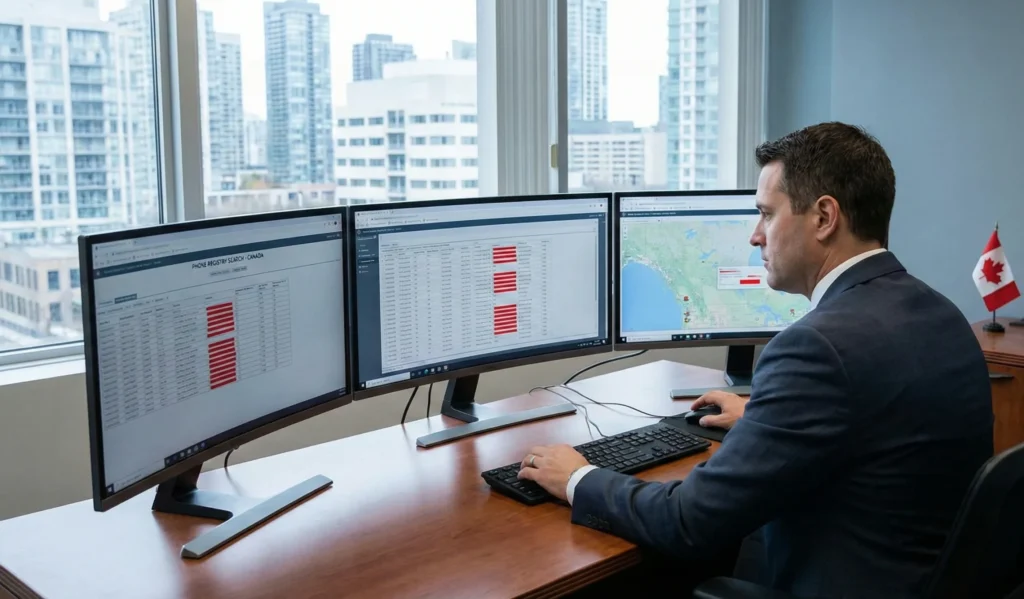
Real Example: Phone Search Led to Successful Service
A respondent in a Small Claims matter could not be located at two addresses.
Our phone search revealed:
- A mobile number consistently active in Peel Region
- An address associated with that number
- Workplace confirmation through cross-referencing
Personal service was completed within 48 hours, avoiding a substituted service motion.
Common Misconceptions About Registered Phone Searches
Myth 1: Anyone Can Do It Online
False. Reliable phone searches require licensed databases.
Myth 2: Phone Searches Are Illegal
False. They are legal when done properly for lawful purposes.
Myth 3: Phone Searches Track Live Location
False. Real-time tracking is not permitted.
Myth 4: Results Are Always Complete
False. Availability depends on number type and registration.
Why Use Professionals for Registered Phone Searches
Professional services provide:
- Legal compliance
- Accurate results
- Court-acceptable documentation
- Cross-referenced verification
- Integration with skip tracing
- Fast turnaround (often same day)
Select Serve and File integrates phone search services into broader legal support workflows.
What Next?
If you require a phone search in Canada for process serving, skip tracing, estate matters, or legal investigations, Select Serve and File Process Server Inc. provides lawful, accurate, and confidential services nationwide. Contact us today.
FAQs
Q: What is a registered phone search?
A: A professional search linking a phone number to subscriber or public record information.
Q: Is a phone search legal in Canada?
A: Yes, when performed lawfully for legitimate purposes.
Q: Can it show live location?
A: No. Real-time tracking is not permitted.
Q: Who uses phone searches?
A: Law firms, process servers, investigators, lenders, and estate professionals.
Q: How long does a phone search take?
A: Often same day or within 24 hours.Q: Can phone searches help with the service of documents?
A: Yes. They often identify updated addresses or workplaces.