
Can You Serve Legal Papers Yourself in Ontario?
Can I serve papers myself in Ontario? Sometimes, but it depends on the proceeding, document, and service method required. In some situations, you may be able to arrange service yourself. In others, the rules may require someone else to serve the documents. Always check the current requirements before attempting service.
What the rules say
If you are asking can I serve papers myself in Ontario, start by identifying the type of proceeding.
Civil matters can be governed by the Ontario Rules of Civil Procedure. Family matters follow the Family Law Rules. These rules set out different requirements for serving different types of documents.
The Ontario Rules of Civil Procedure (O. Reg. 194) provide the framework for service in civil proceedings covered by those rules.
The Family Law Rules (O. Reg. 114/99) contain separate requirements for family proceedings.
The answer to can I serve papers myself in Ontario is therefore not simply yes or no. You need to check who must serve the particular document and how service must happen.
For some documents, being a party to the proceeding can prevent you from serving the document yourself. The rules may require another person to complete service.
For example, Ontario’s Family Law Rules contain requirements concerning who may serve documents. Certain documents requiring special service must be served by someone other than the party. The person serving must also meet applicable requirements, including being an adult. [VERIFY]
Civil proceedings also contain specific requirements for personal service and other permitted methods. The appropriate method depends on the document and circumstances.
This means can I serve papers myself in Ontario should always be answered by checking the current rule first.
The Superior Court of Justice also publishes practice directions that can provide additional procedural information. You can review the Superior Court of Justice practice directions for current court guidance.
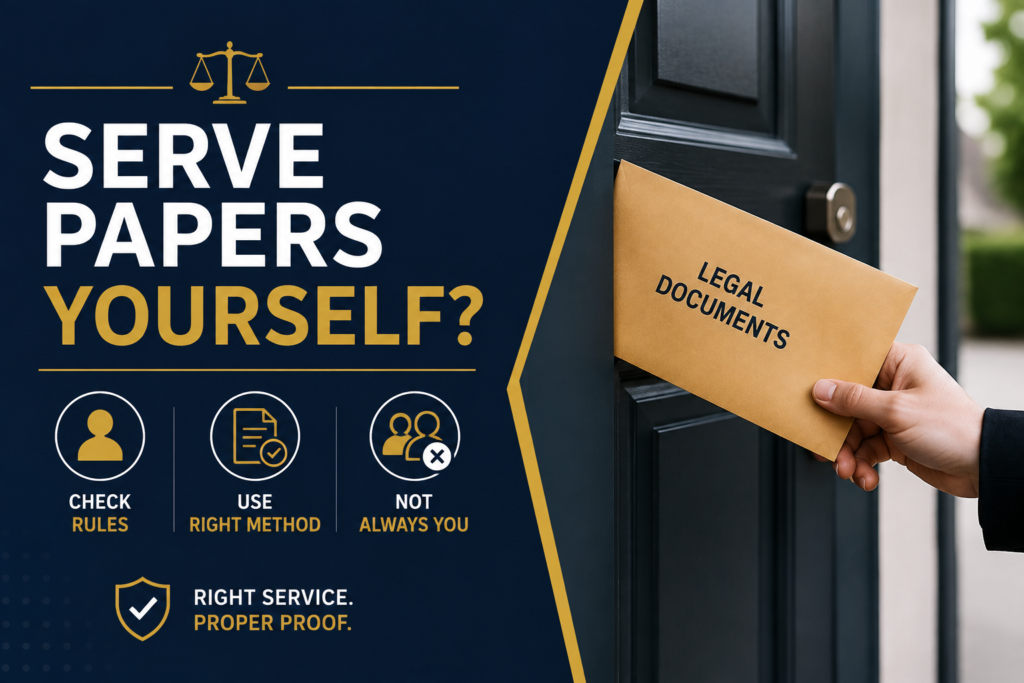
When can I serve papers myself in Ontario?
Can I serve papers myself in Ontario if I am the person bringing the case? Sometimes, but you should not assume that your role makes self-service permitted.
A key distinction is whether you are required to be independent from the proceeding. If the applicable rule says the server must be someone other than the party, personally delivering the document yourself would be prohibited.
In those situations, you may be able to ask a friend or relative who meets the applicable requirements to serve the documents.
A professional process server is another option. The person serving does not necessarily have to be a lawyer. What matters is whether that person meets the requirements for the particular document and method.
This is why serving papers yourself requires more than simply finding the recipient and handing over the documents.
You should also consider whether the document requires personal service. Personal service generally means delivering the document directly to the individual in the manner required by the applicable rules.
Other documents may be permitted to be served using different methods. The rules can also contain special requirements for corporations, lawyers, representatives, or other recipients.
DIY process serving can therefore work in some situations, but it should begin with checking the applicable requirements.
If you are unsure whether you can serve a particular document yourself, do not rely on a general rule from another case. Check the current rules for your proceeding.
How to comply correctly
If you are considering can I serve papers myself in Ontario, use a simple checklist before making the attempt.
- First, identify the proceeding. Determine whether your matter is civil, family, or another type of proceeding.
- Second, identify the document. The required service method can depend on the document being served.
- Third, check who can serve it. Look for requirements about the server’s age, relationship to the case, or whether the server must be independent.
- Fourth, confirm the service method. Do not assume that personal delivery is always permitted.
- Fifth, identify the recipient. Make sure you know who must receive the document.
- Sixth, keep detailed records. Record the date, time, location, documents served, recipient, and method used.
- Seventh, check the proof requirements. You may need an affidavit or another accepted record showing that service occurred.
Accurate records matter because service may later be questioned.
[CONFIRM] From practical operating experience, one of the most common problems is that people focus on finding the recipient but overlook whether they are allowed to be the server. The delivery may appear straightforward, but the choice of server can affect whether the service complies.
Another issue is assuming that a willing friend or relative can always serve documents. Their relationship to the parties, age, or role may matter in a particular proceeding.
If you need someone else to handle delivery, you can consider professional assistance. A professional server can complete the service assignment and keep records of what occurred.
A process server is not a lawyer. They can handle the physical service and document the attempt, but they cannot provide legal advice about your case.
What happens if you get it wrong?
The biggest concern with incorrect self service of documents is a risk of challenge.
If the wrong person serves the document, or the required method is not followed, another party may question whether service was valid.
The effect depends on the proceeding, document, and specific service requirement. You should not assume that an unsuccessful service attempt automatically satisfies the rules.
You also should not assume that every failed attempt means your case cannot continue. Depending on the circumstances, another service method or court process may be available.
If ordinary service cannot be completed, you may need to investigate whether an alternative method is permitted. The correct procedure depends on your matter.
The key question remains can I serve papers myself in Ontario? Before acting, confirm that the rules allow you to serve that particular document.
If you are considering professional assistance, you can arrange professional process serving in Ontario through a process serving company.
Select Serve and File Process Server Inc has served Ontario since 2005. The company provides process serving and court-related services for individuals, law firms, financial institutions, corporations, and other organizations.
Whether you use a professional server or another eligible adult, the goal is the same. The document should reach the correct recipient through a permitted method, with accurate records of what happened.
So, can I serve papers myself in Ontario? Sometimes. The answer depends on the rules that apply to your specific proceeding and document.
Need documents served? Request a quote or call (647) 568-5700.
“This article provides general information about process serving and court procedure in Ontario. It is not legal advice and does not create a solicitor client relationship. Court rules and procedures change. Confirm current requirements with the relevant court or consult a licensed Ontario lawyer or paralegal before acting.”