
What Is a Process Server in Ontario?
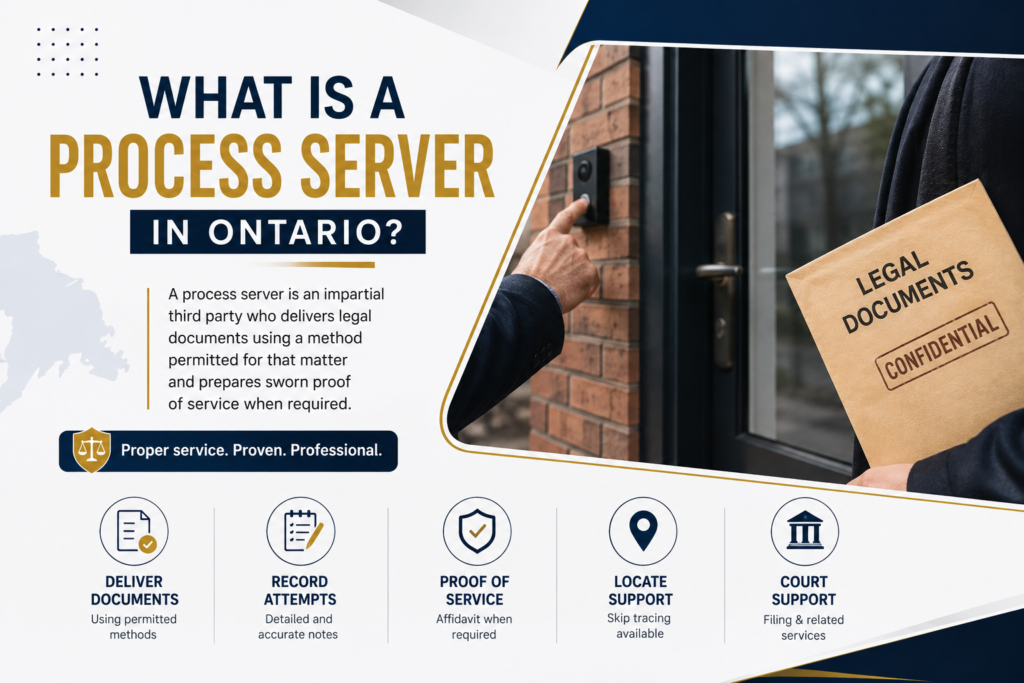
What is a process server? A process server is an impartial third party who delivers legal documents to a person or organization using a method permitted for that matter. A process server also records attempts and prepares sworn proof of service when required. In Ontario, proper service helps show that required legal documents reached the intended recipient.
Need documents served in Ontario? You can learn about our process serving service or request a quote.
Why it matters in Ontario
What is a process server used for in an Ontario proceeding? The role becomes relevant when court documents must reach another person or organization and the service method needs to follow applicable court rules or an order.
Service of process is the formal delivery of legal documents connected with a court or legal proceeding. Depending on the document and proceeding, service may involve personal service, another permitted method, or a method authorized by a court order.
The Rules of Civil Procedure set out different service methods for civil proceedings. For example, the rules distinguish between originating process and other documents. They also provide rules for proving service.
The Ontario Rules of Civil Procedure (O. Reg. 194) should be checked for the requirements that apply to your particular document.
What is a process server? In practical terms, the process server helps create a reliable record that service was attempted or completed. That record can matter if someone later disputes receiving a document.
Select Serve and File Process Server Inc. has served Ontario since 2005, supporting clients with process serving and related court services.
What is a process server and what it involves in practice
What is a process server responsible for from the first instruction to completed service? The work usually involves several practical steps.
- First, you provide the documents and information needed to identify the recipient. The process server reviews the material and confirms the known address, relevant details, and any service instructions provided.
- Second, the process server plans the attempts. The timing and location can matter, especially if the recipient is rarely home or access to a building is restricted.
- Third, the process server makes the required attempt. Where personal service applies, the server generally needs to deliver the document directly to the person in the manner required by the applicable rules.
- Fourth, the server records what happened. Good records can include the date, time, location, documents delivered, and observations relevant to identifying the recipient.
- Fifth, the process server prepares proof of service when the applicable procedure requires it. Under the Rules of Civil Procedure, service may be proved by an affidavit of the person who served the document.
This is where the process server meaning becomes clearer. The role is not simply carrying an envelope from one place to another. It involves legal document delivery, careful record keeping, and following the service method that applies to the matter.
The Ontario Court Forms website provides official forms for civil, family, and Small Claims Court proceedings. The forms site also warns users to verify current information before acting.
For example, if you need help understanding the service process for a Small Claims matter, see how to serve a small claims court claim in Ontario.
The process server definition Ontario readers often need is therefore practical: a process server is a person who performs or documents legal document delivery in accordance with the applicable requirements.
For broader terminology, you can also use a 7 process serving myths, debunked resource to clarify common misunderstandings.
What does a process server do?
What does a process server do after receiving your documents? The answer depends on the matter, but the work can include:
- Reviewing the documents and service instructions.
- Confirming available information about the recipient.
- Planning appropriate attempts.
- Delivering documents using the required method.
- Recording unsuccessful attempts.
- Preparing sworn proof where required.
- Reporting the outcome to the client.
The exact steps depend on the document, proceeding, applicable rules, and any court order.
Where people commonly go wrong
What is a process server able to prevent? Professional handling can reduce several common service problems, although no service provider can guarantee a particular court outcome.
1. Using the wrong service method
Different documents can have different service requirements. Assuming that every legal document can be handed to a person, mailed, emailed, or left at an address can create problems.
The Rules of Civil Procedure contain different provisions for personal service, alternative service, mail, email, courier service, and proof of service.
2. Providing incomplete recipient information
A process server needs useful information to make effective attempts. An outdated address or incomplete identification details can make the job harder.
If you do not have a reliable address, a locate or skip tracing service may sometimes be relevant. The process server can explain what information is needed before attempts begin.
3. Treating an attempt as proof of completed service
An attempt to serve someone is not automatically the same as successful service.
If the recipient cannot be located, the server should document what happened. If service is completed, the applicable proof should accurately describe the event.
The Superior Court of Justice provides official information about filing procedures, rules, forms, and court practices. Its guidance should be checked alongside the rules that apply to your matter.
When to use a professional
What is a process server useful for when you already have the documents? A professional can handle the operational side of service while you remain responsible for understanding the legal requirements that apply to your matter.
Using a professional can make sense when the recipient is difficult to locate, has previously avoided service, lives in a controlled-access building, or when you need clear documentation of attempts.
A professional process server can also coordinate related services such as affidavits, locate work, and court filing where offered.
If you are unsure what service method applies, do not rely on a process server as a substitute for legal advice. Ask a licensed Ontario lawyer or paralegal about the requirement.
The what is a process server question ultimately comes down to function. A process server provides professional document delivery and evidence of what occurred during service.
Contact Us
Need documents served in Ontario? Request a quote or contact us.
This article provides general information about process serving and court procedure in Ontario. It is not legal advice and does not create a solicitor client relationship. Court rules and procedures change. Confirm current requirements with the relevant court or consult a licensed Ontario lawyer or paralegal before acting.