
What Is a Continuing Record in Family Law?
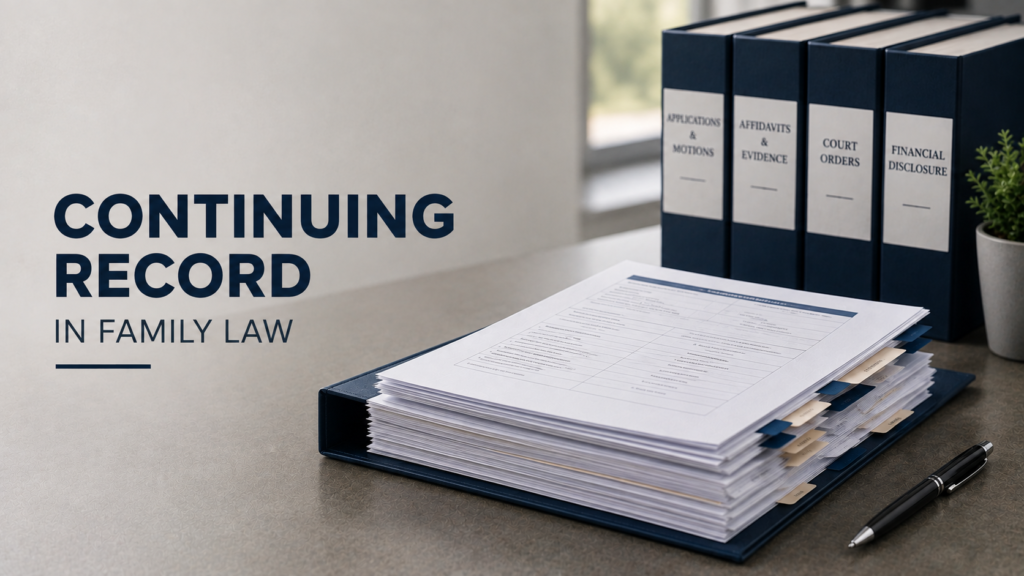
A continuing record family law file is the organized court record for a family law case in Ontario. It brings filed materials together in one cumulative record. The record helps the court and parties locate documents, track the history of the case, and understand what has been filed.
Why it matters in Ontario
A continuing record family law file helps keep family court materials organized as a case develops. Instead of treating every filing as a separate file, the continuing record brings relevant materials together over time.
The Family Law Rules set out requirements for maintaining family court records. The exact requirements can depend on the proceeding and the documents involved.
If you are asking what is a continuing record, think of it as the organized working record of the case. New material is added as the matter continues, subject to the applicable rules.
A continuing record can help the court quickly locate earlier documents. It can also help the parties understand what has already been filed.
The Superior Court of Justice provides provincial and regional practice directions for Family Court proceedings. These directions can include additional procedural requirements. The Court states that its provincial directions cover practices and procedures in Family matters, while regional directions can apply within specific regions. (Ontario Superior Court of Justice)
You should also use current official court forms. The Ontario Court Forms website provides forms for Ontario family court proceedings.
This is why understanding continuing record family law requirements matters before you prepare or update a court record.
What it involves in practice
A family law continuing record is more than a stack of papers. It is an organized collection of materials filed in a family court proceeding.
Depending on the proceeding, it can contain documents such as:
- The originating court materials.
- Filed responses or other responding materials.
- Affidavits.
- Financial information.
- Court orders.
- Endorsements.
- Other documents that the applicable rules require to be included.
The record is cumulative. In simple terms, that means the file builds over time.
A continuing record family law file may therefore contain documents from different stages of the case. The organization allows later materials to be understood alongside earlier filings.
The table of contents
The table of contents is an important part of an organized record.
It helps identify what documents are included and where they can be found. As the record grows, the contents should reflect the materials that belong in it.
The exact continuing record requirements depend on the applicable Family Law Rules and the nature of your proceeding.
Volumes and organization
A continuing record can become large in a case involving many filings.
The materials may be organized into volumes when required. An endorsement volume may also be relevant depending on the court’s requirements and the type of proceeding.
Do not assume that every family case uses identical record organization.
The Superior Court of Justice explains that its filing and procedural resources include rules, forms, filing requirements, and provincial and regional practice directions. (Ontario Superior Court of Justice practice directions)
Where people commonly go wrong
A continuing record family law file can become difficult to manage when documents are added without checking the applicable requirements.
Not updating the table of contents
A common problem is adding new material without properly updating the record’s contents.
The table of contents should help the court identify the documents included in the record. If it does not match the materials, locating documents becomes harder.
Adding documents without checking whether they belong
Not every document you have should automatically become part of the continuing record.
The applicable rules determine what should be included.
If you are unsure, do not guess. Check the current Family Law Rules or ask a licensed Ontario lawyer or paralegal.
Mixing different court records
Family law matters can involve several types of records and document packages.
A continuing record is not automatically the same thing as every other record prepared for a motion, conference, hearing, or application.
This distinction matters when you are preparing documents for filing.
Using old procedural information
Court procedures can change.
Online guides can also become outdated. The Superior Court of Justice maintains current practice directions and identifies both provincial and regional directions. (Ontario Superior Court of Justice)
Always check the current court requirements before preparing a filing package.
Losing track of older documents
Because the record is cumulative, older materials can remain relevant to the court file.
If you need a copy of an earlier filing, you may need to retrieve it from the court record.
From real operating experience, one common problem is receiving family court materials where the latest filing has been added, but the record has not been properly updated to reflect the new material.
When to use a professional
A continuing record family law file can involve many documents and several filing steps. Administrative support can be useful when you already know what needs to be filed but need help managing the document process.
You may consider professional support when:
- You have several documents to file.
- You need an existing record updated.
- You need documents retrieved from a court file.
- Filing and service need to be coordinated.
- You want help with the administrative side of court filing.
Select Serve and File Process Server Inc. has served Ontario since 2005. We provide process serving and court filing support.
We are a process serving company, not a law firm. We do not provide legal advice or decide which documents belong in your court record.
If you are unsure about the legal requirements for your continuing record, speak with a licensed Ontario lawyer or paralegal.
The key point about continuing record family law is organization. The record should accurately reflect the materials required by the applicable rules and remain organized as the case progresses.
Need documents served in Ontario? Request a quote.
This article provides general information about process serving and court procedure in Ontario. It is not legal advice and does not create a solicitor client relationship. Court rules and procedures change. Confirm current requirements with the relevant court or consult a licensed Ontario lawyer or paralegal before acting.