
What Is Process Serving? A Plain-English Guide
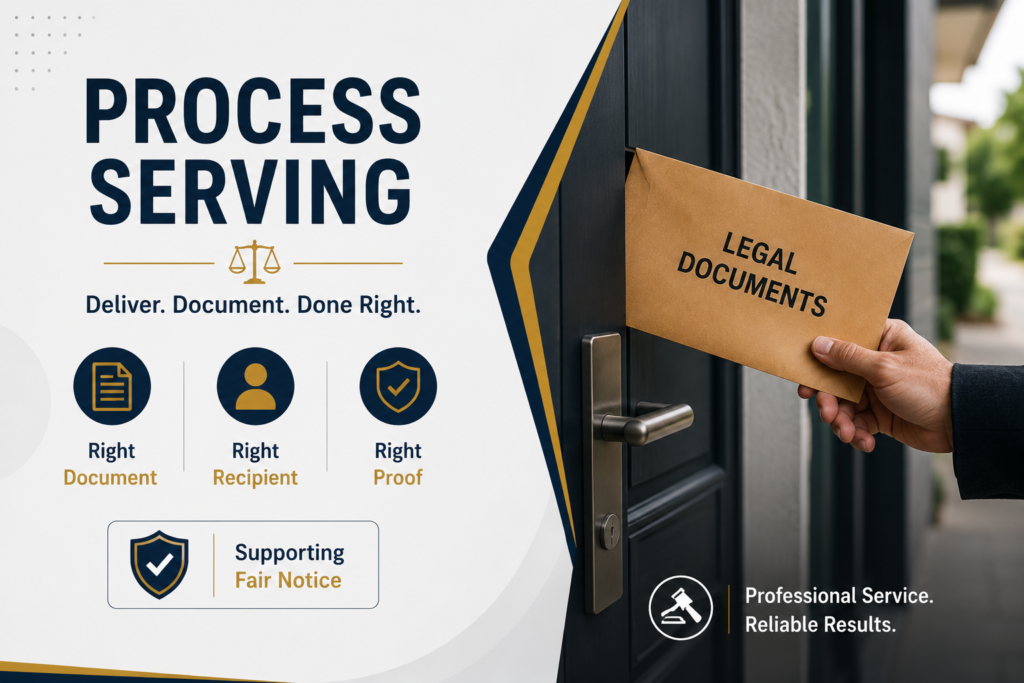
What is process serving? It is the formal delivery of legal documents to a person or organization involved in a legal matter. The purpose is to make sure the recipient receives the documents in a legally recognized way and that there is reliable proof the service took place.
Why it matters in Ontario
Process serving is more than handing someone a document. It is a litigation step that can affect whether a proceeding moves forward properly. The required method depends on the type of document, the parties involved, and the rules or court order that apply.
The process serving meaning is easiest to understand this way: the right document must reach the right recipient using an accepted method, with proper evidence of what happened.
In Ontario, the Rules of Civil Procedure set out different methods of service. For example, some originating processes generally require personal service or an alternative method allowed by the rules. Other documents may be served through methods such as mail, courier, electronic means, or service on a lawyer, depending on the circumstances.
The Ontario Rules of Civil Procedure (O. Reg. 194) are the key starting point for civil matters covered by those rules. However, not every legal matter follows the same procedure.
Correct service supports natural justice. In simple terms, a person should have a fair opportunity to know about a legal proceeding and respond to it.
This is why understanding what is process serving matters before you attempt service yourself. A mistake may create questions about whether the recipient was properly notified.
What it involves in practice
Process serving explained in plain English means following a clear process from receiving the documents to recording the result.
First, you need to identify exactly what documents must be served and who must receive them. You should also check whether the documents come with instructions or whether a court rule or order specifies a particular method.
Next, the server attempts service using the method that applies to the matter. Personal service may involve leaving a copy directly with the individual. Service involving a corporation, lawyer, or another type of recipient can have different requirements.
The recipient is a key part of the process. Correct identification matters because delivering documents to the wrong person may not accomplish the required service.
The server should then record relevant details about the attempt. Depending on the matter, this can include the date, time, location, documents served, person served, and method used.
Proof of service is also important. Under the Rules of Civil Procedure, service may be proved by an affidavit of the person who served the document. The official Ontario forms site lists the current Affidavit of Service form among the Rules of Civil Procedure forms.
You can review current forms through the Ontario Court Forms. The site provides forms for civil, family, and Small Claims Court proceedings and warns users to verify current requirements before acting.
The exact requirements can vary. If you are unsure which service method applies, check the current rules, court materials, or obtain advice from a licensed Ontario lawyer or paralegal.
Where people commonly go wrong
One common mistake is assuming that every legal document can be handed directly to the person involved. That is not always the case.
Another problem is failing to confirm who should receive the documents. The correct recipient may be an individual, lawyer, corporation representative, or another person identified by the applicable rules.
People also sometimes focus only on delivery and forget about proof. A successful attempt should be documented carefully so there is a record of what occurred.
[CONFIRM] From practical process serving experience, one of the issues that most often causes problems is incomplete information about the recipient or service location. Missing details can make an otherwise straightforward assignment harder to complete and can lead to repeated attempts.
Another common issue is relying on an old version of a form or procedure. Court rules and forms can change, so current sources should be checked before service is attempted.
The Superior Court of Justice provides current information, court resources, rules, forms, and guides for people representing themselves. Its official website is a useful reference when your matter is before that court.
If service cannot be completed, do not assume that repeated attempts automatically satisfy the requirements. The appropriate next step depends on the circumstances and the rules that apply.
When to use a professional
You can sometimes handle service yourself. However, a professional process server can be useful when you want an experienced person to handle the delivery and document the result.
Professional service may be especially helpful when the recipient is difficult to locate, service needs to be attempted at a particular place, or you are concerned about documenting the attempt properly.
Select Serve and File Process Server Inc has served Ontario since 2005. The company works with individuals, law firms, financial institutions, corporations, and other organizations, providing process serving and related court services.
A professional server can also help separate the physical task of serving documents from your other responsibilities as a self-represented litigant, paralegal, or law firm clerk.
However, a process serving company is not a law firm. A server can handle service according to the instructions and applicable requirements, but cannot provide legal advice about your case.
If you are still asking what is process serving, think of it as the formal delivery and documentation of legal documents using a method recognized for your particular matter. Getting the method, recipient, and proof right can help prevent avoidable service problems.
Need documents served in Ontario? Request a quote or call (647) 568-5700.
“This article provides general information about process serving and court procedure in Ontario. It is not legal advice and does not create a solicitor client relationship. Court rules and procedures change. Confirm current requirements with the relevant court or consult a licensed Ontario lawyer or paralegal before acting.”