
How to Serve an Eviction Notice in Ontario (N4 and N5)
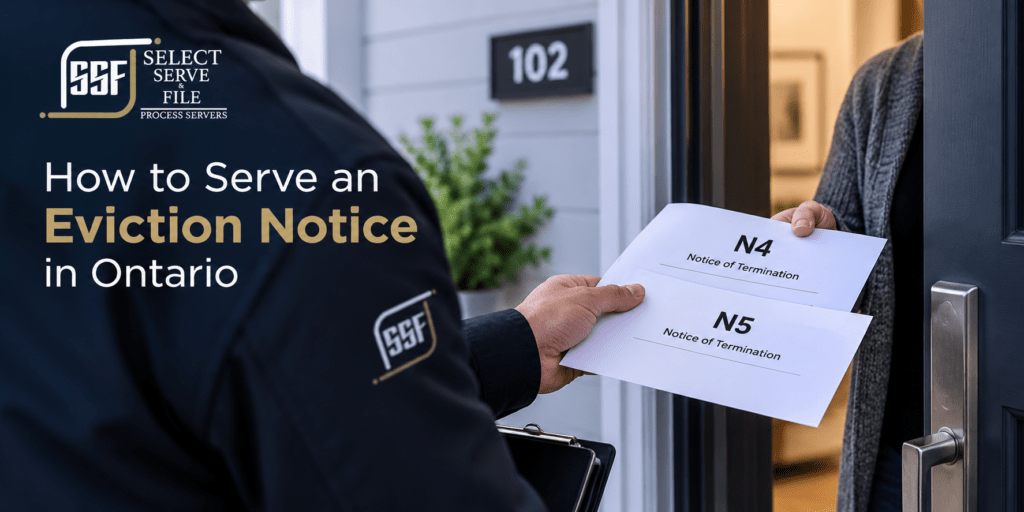
If you need to know how to serve an eviction notice in Ontario, start by choosing the correct notice, completing it carefully, and serving it using an approved method. For N4 and N5 notices, proper service and clear proof of service are important parts of the process.
What you need before you start
Before learning how to serve an eviction notice in Ontario, make sure you have the correct notice for the situation.
An N4 is used when a tenant has not paid rent. An N5 is used for certain problems involving interference with others, damage, or overcrowding. The Landlord and Tenant Board provides the current forms and instructions for both notices.
The Residential Tenancies Act sets the legal framework for residential tenancies in Ontario. The Landlord and Tenant Board handles applications and hearings involving many landlord and tenant disputes.
Check the current instructions before completing the notice. Requirements can change, and the correct notice depends on the reason for ending the tenancy.
You should also have accurate information about the tenant and rental unit. Check the spelling of names, rental unit details, and the information included in the notice.
Do not assume that handing over a document is enough. The method of service can affect when the LTB considers a document received.
The steps in order
1. Choose the correct notice
Start by confirming whether an N4 or N5 is appropriate for the situation.
For non-payment of rent, the N4 is the relevant notice. For certain issues involving interference, damage, or overcrowding, the N5 may apply. The LTB lists both forms and their current instructions.
If you are unsure which notice applies, review the current LTB guidance or seek legal advice. A process server can serve the document you provide, but does not decide which legal notice you should use.
2. Complete the notice carefully
Fill out the notice using the current LTB form.
Review every section before arranging service. Errors in names, dates, rental unit information, or other details can create problems later.
Pay particular attention to the termination date and the instructions that apply to your specific notice.
Always, confirm the current notice-period requirements directly against the instructions for the N4 or N5 you are using before service.
3. Select an approved service method
The next part of how to serve an eviction notice in Ontario is choosing a permitted method.
LTB guidance lists several possible methods, depending on the circumstances. These can include personal delivery, courier, mail, and other approved methods. Special rules can apply when serving a tenant or occupant at a rental unit.
For example, LTB guidance states that documents may be given to an apparent adult in the rental unit. In certain circumstances, documents may also be placed under the unit door or through the mail slot while the person remains in possession of the unit.
Do not choose a method simply because it is convenient. Use the method permitted for your situation.
4. Serve the tenant
Arrange serving N4 notice or N5 notice service using the method that applies to your circumstances.
If using a professional process server, provide the complete notice and accurate service information. The server can document what happened during the attempt.
Select Serve and File has served Ontario since 2005, providing process serving and related court services to individuals, law firms, businesses, and other clients.
5. Record the service details
After service, keep a clear record of what happened.
Record the date, location, person served, method used, and other details required by the applicable documentation. These details can later help establish what happened.
For landlord notice service Ontario matters, this record is especially useful if the landlord later files an application with the LTB.
6. Prepare the proof of service
The LTB uses a Certificate of Service to record when, where, and how a document was served. When required, the person who served the document completes it.
The current LTB materials provide a Certificate of Service form for this purpose. The form records information such as the rental unit, document served, person served, and service details.
Keep the completed documentation with your records and follow the current LTB instructions about filing it.
How to prove it was done properly
Knowing how to serve an eviction notice in Ontario is only part of the process. You should also be able to show how service happened.
If you later file an application connected with a notice of termination, the LTB says you must provide a copy of the notice and a completed Certificate of Service showing how the notice was served.
The service record should match what actually happened. Do not record a method that was not used.
The LTB can require a party to establish when and how a document was received if an approved service method was not followed. Failure to serve correctly can also create serious procedural problems.
For family court matters, service requirements are different. The Family Law Rules contain separate rules for serving court documents and recognize an affidavit of service as one way to prove service.
That distinction matters if you are a family law clerk or party handling documents in both tenancy and family proceedings. Do not assume that the LTB service rules apply to family court documents.
Mistakes that cause problems
Several common mistakes can make service harder to prove.
- Using the wrong notice. An N4 and N5 address different circumstances. Confirm the correct form before arranging service.
- Using an unapproved method. A method that seems reasonable may not satisfy the applicable rules.
- Ignoring timing. The date a document is considered served can depend on the method used. The LTB provides specific guidance on when documents are considered received.
- Keeping weak records. A vague note saying that a notice was delivered may not provide enough detail later.
- Waiting until the last moment. Service attempts can require more than one visit, especially when the recipient is difficult to reach.
- Confusing service with eviction. Serving an N4 or N5 does not itself mean the tenant has been physically evicted. If the matter continues, the landlord may need to proceed through the LTB process.
The safest approach is to check the current LTB instructions before every notice. The LTB’s official resources explain the available forms, service methods, and proof requirements.
Need documents served in Ontario? Request a quote or call (647) 568-5700.
“This article provides general information about process serving and court procedure in Ontario. It is not legal advice and does not create a solicitor client relationship. Court rules and procedures change. Confirm current requirements with the relevant court or consult a licensed Ontario lawyer or paralegal before acting.”
“Deadlines and service requirements vary by document type, court and proceeding. Missing a deadline can result in your matter being delayed or dismissed. Verify all timelines against the applicable rules and the practice direction of the court or tribunal where your matter is filed.”