
Skip Tracing in Ontario: 5 Steps Professionals Use in 2026
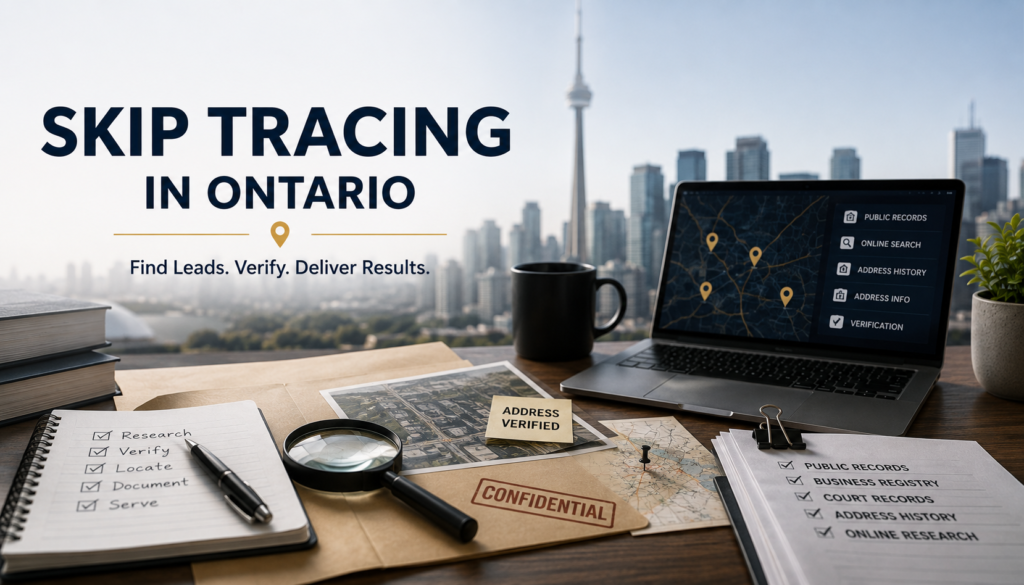
Skip tracing in Ontario helps locate people whose current address or contact information is unknown. It can support process serving, litigation, enforcement, and other legitimate matters. Professional skip tracing combines available records, online research, address verification, and documented field work rather than relying on one search result.
1. Gather Information Before Skip Tracing in Ontario
Start by collecting every reliable detail you already have.
Useful information can include:
- Full legal name
- Known aliases
- Last known address
- Previous addresses
- Phone numbers
- Email addresses
- Known employers
- Business names
- Relevant court documents
The more accurate your starting information, the easier it is for skip tracing in Ontario professionals to compare possible matches.
Avoid guessing when information is incomplete. Tell the service provider which details are confirmed and which are old or uncertain.
2. Search Public Records and Business Information
Public records are an important part of skip tracing in Ontario.
Depending on the assignment, professionals may review publicly available information such as:
- Business registration records
- Property-related information
- Court records
- Corporate information
- Public directories
- Litigation and insolvency records
The Ontario Business Registry provides access to Ontario business information and related search services.
A record can provide a useful lead, but it should not automatically be treated as proof that a person currently lives or works there.
3. Review Public Online Information
Public online information can provide additional leads during skip tracing in Ontario.
Professionals may review publicly accessible:
- Business websites
- Professional profiles
- Public social media posts
- Online directories
- Company pages
- Public listings
For example, a public professional profile may identify an employer or business connection.
However, public information must still be handled responsibly. The Office of the Privacy Commissioner of Canada guidance on protecting personal information explains principles concerning appropriate collection, use, accuracy, and safeguards.
Professional skip tracing in Ontario should never involve unauthorized access to private accounts or illegally obtained information.
4. Verify the Lead Before Skip Tracing in Ontario Is Complete
Finding a possible address is only one part of skip tracing in Ontario.
Professionals should compare information from multiple sources where appropriate. This can help identify outdated records and reduce the chance of sending a process server to the wrong location.
Verification may involve comparing:
- Address history
- Public records
- Business connections
- Building information
- Publicly available online information
- Lawful field observations
[CONFIRM] In practical process serving work, treating the first database result as confirmed can lead to unnecessary failed attempts. Confirm this observation against your team’s current operating experience.
5. Document the Skip Tracing in Ontario Search
Good documentation is an important part of skip tracing in Ontario.
Record:
- Sources checked
- Search dates
- Information found
- Addresses considered
- Verification steps
- Unsuccessful searches
- Relevant observations
Detailed records can help show what reasonable locating efforts were made.
In some circumstances, evidence about steps taken to locate a person may be relevant when seeking an alternative service order. The exact requirements depend on the proceeding and applicable rules.
When Is Skip Tracing in Ontario Useful?
Skip tracing in Ontario may be useful when:
- A recipient has moved
- Service attempts have failed
- A current address is unknown
- A defendant cannot be located
- A witness has changed contact information
- A workplace needs to be identified
- An individual appears to be avoiding service
Skip tracing does not automatically authorize an alternative method of service. If someone cannot be located, confirm the appropriate procedural step with the relevant court or a licensed Ontario lawyer or paralegal.
Why Professional Skip Tracing in Ontario Can Help
Professional skip tracing in Ontario combines research with experience in interpreting information.
Select Serve and File Process Server Inc. provides skip tracing, locate searches, process serving, court filing, and document retrieval. The company has served Ontario since 2005.
Combining skip tracing in Ontario with process serving can make it easier to move from locating a potential address to arranging the appropriate service. The company can also assist with related process serving and filing requirements, depending on the matter.
Need documents served? Request a quote or call (647) 568-5700.
“This article provides general information about process serving and court procedure in Ontario. It is not legal advice and does not create a solicitor client relationship. Court rules and procedures change. Confirm current requirements with the relevant court or consult a licensed Ontario lawyer or paralegal before acting.”